
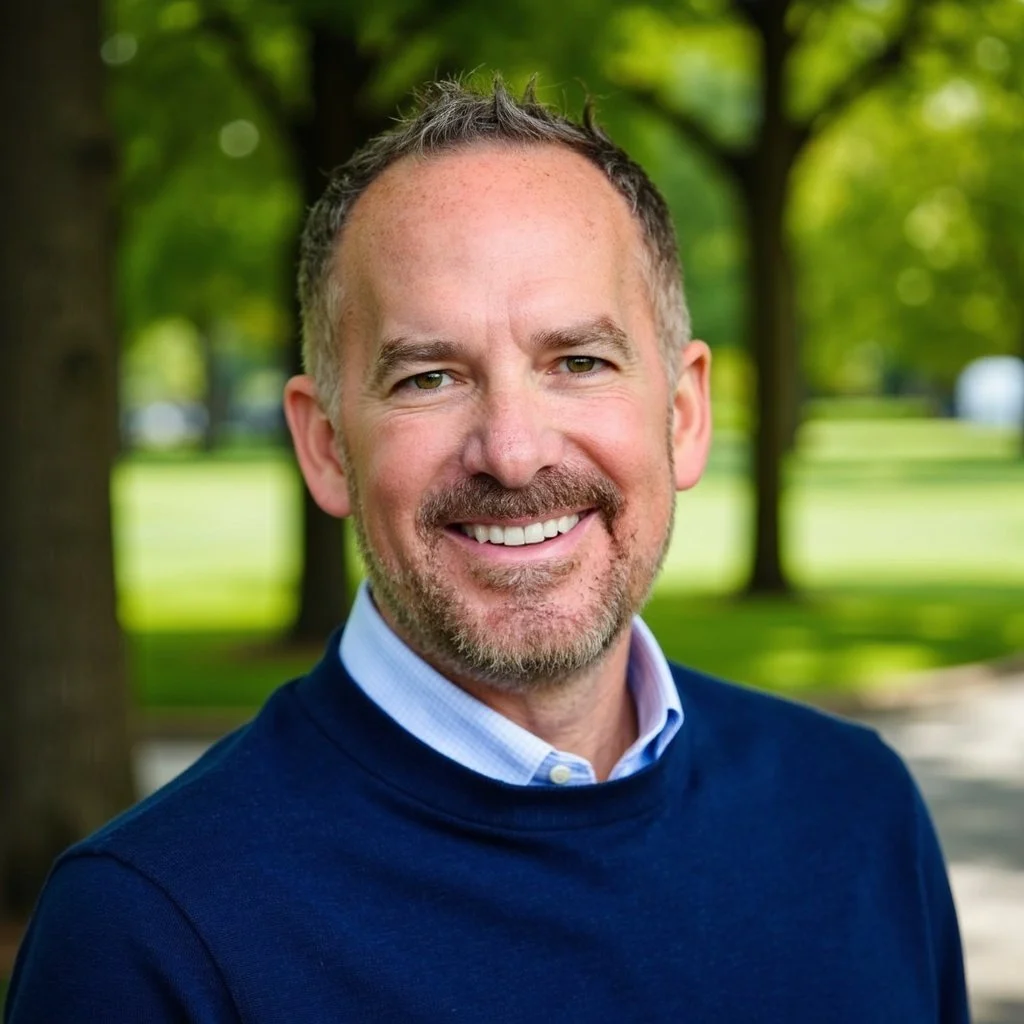
It's been almost a year at Snooze. When you first started thinking about the role and stepped into Snooze, what attracted you to the opportunity, and what did you see in the brand that made you say, this is the next great step for me?
The opportunity was certainly the vibrancy of what Snooze was all about. Having been in Denver for so long, I always knew the brand and that it was a bit quirky—a lot of energy, really passionate about food, and always putting a little twist on what it was doing. I liked the modernity of the brand itself. Coming out of the marketing world, I knew there was so much to it.
I was very impressed that a brand that was only 20 years old had some serious firepower when it came to awareness. It outpunched its weight class in terms of how many people knew Snooze and its ability to break out of its home market. For restaurant concepts, that's incredibly difficult—to have the staying power to grow out of a home market and then succeed in different markets. It's doing great in San Diego, Austin, Nashville and Charlotte. That impressed me. I knew it could grow.
As I started to kick the tires, I also saw that it had very progressive private equity partners behind it in Stripes, Brentwood, and ACG Partners. That partnership was attractive to me. And then it was a single concept. While I love the idea of multi-concept, the opportunity to focus on growing one concept and being strategic about that was very appealing. I thought it was a great opportunity to take the next step as a relatively new CEO. I had spent four and a half years as a CEO at my prior stop, and I thought this was a great opportunity for my second stop as a CEO.
Once you joined, what was something that surprised you about Snooze once you got in the organization? Whether positively or maybe some opportunities that you didn't see or appreciate from the outside?
I'm a big listener. I don't believe in coming in with your own playbook and taking something that might have worked at another company and simply applying it to a new one. The DNA of a brand is very important, and that's not just the brand itself—it's the people within the organization. So I did a stop, start, continue exercise, and I took very seriously what people were saying.
I was surprised that people wanted to be treated, and wanted the brand to be treated, a little more professionally. The headquarters was called the “Mothership,” and people didn't like that. They felt a little embarrassed when they told people about it. We pivoted and called it the Restaurant Support Center, which, as a marketer, doesn't sound very creative. But we're not the nerve center—the center exists to support the restaurants. We're all about our restaurants, and that's what's important.
The org chart was also called a “love chart.” But it's an organization chart, and people need to work and be held accountable. People wanted accountability. They wanted KPIs. They wanted to talk about sales, attachment rates and driving beverages. Even though we have a culture of having a lot of fun and believing in fresh ingredients and craft food, there was a degree of professionalism people were craving.
That was refreshing because it meant people were hungry to be led and to gravitate toward those things. I didn't have to coach the other things that are really hard—to believe in your community, scratch-made food and ingredients that are healthier for you. I think that's a magic combination: giving people the confidence that we know how to get things done, can help them lead, and can build teams that will really go after it. That was the true surprise for me.
Snooze, as you mentioned, has been around for 20 years, you just celebrated the 20th anniversary a couple of months ago.
Today, the breakfast and brunch category is much more competitive than 20 years ago.
How do you take that established innovator DNA and continue to grow in that competitive category?
The good thing about what was established at Snooze is that we're not cookie-cutter. We truly match the communities and neighborhoods we're in, so one Snooze does not look like another. Our menus carry through—you can find a tiramisu French toast in Austin and in La Jolla—but the restaurants won't look the same. Pflugerville will look different from La Jolla. The seating arrangements, murals and what's happening in and around the area are different. It feels like Snooze, but there are local differences, from the T-shirts to the crew.
I think people like that uniqueness today. We're starting to lean into it with more regional menu elements and looking at an espresso program that can be more regionalized. There's familiarity across the brand, but it is “my Snooze in my neighborhood.” I think that's important.
We also believe in hospitality. Every restaurant tries to go after that, but it's genuinely an experience we're proud of. We like to be that punch in the face, if you will, on a Sunday morning—whether you're hung over, meeting friends, or bringing kids coming off a sleepover. We want to meet the energy level of those brunch and breakfast occasions. We like to be lively.
At the same time, we have challenges. Our Achilles' heel has been our wait. We haven't always been great at meeting the expectation we set. If we say the wait is 30 minutes and, at 30 minutes, a guest still has another 12, 15 or 20 minutes to go, while a competitor seats them at 30, that's a problem. We need to do a much better job, and we've been working on that since day one of my arrival. We're making technology changes and need to continue improving operationally.
It's about creating a frictionless experience. We can have the best asset, menu and hospitality, but if we don't make it easy for guests, they can turn around and go somewhere else—for a smaller breakfast and coffee, or even skip brunch. Competition isn't only coming from sit-down restaurants; it's also coming from fast-casual coffee places that are everywhere these days.
You talked earlier about coming up in marketing? How has that marketing background influenced how you view the overall business, whether that's operations, menu, guest experience?
I'm an idea person, so I'm constantly thinking of ways to drive traffic into the restaurant. I believe there are really three areas of the business: in-restaurant traffic, off-premise, and catering. Those three levers are all important right now. Catering is incredibly important to how we're growing, and off-premise and third-party delivery are still very strong. But our lifeblood—and where profitability really is—is in-restaurant traffic. Coming from marketing, I know how important it is to drive that traffic.
I also think one reason I've been able to cross over from marketing into the CEO seat is that I understand you have to be careful when you dial those numbers up. If you drive too much traffic, catering or third-party delivery into a restaurant, you can negatively affect the guest experience. I look at all the touch points in totality—from the music to the flatware to what's happening operationally in the restaurant. Having that big-picture view gives me a good sense of what's happening.
I have lots of ideas, and I have to be careful there aren't too many or that an idea isn't overly influenced simply because it came from the CEO. I'm never offended when an idea goes into the “no” bucket. I always say it's just a pair of twos on the table, and those are relatively easy to beat. I try to look at things through the lens of the consumer—or, in this case, the guest.
I wasn't born on the operations side of the business. While I've worked in restaurants throughout my career—and gravy runs in my veins—I'm not a fantastic operator. I do know how to work with great operators, and I depend on a great partner on that side. The same is true in finance. I understand the dynamics of a P&L and how the business works, and I've bought and sold concepts in my career, which has been very beneficial in seeing under the hood of many restaurant companies. But I rely on a great CFO as a partner as well.
That frees me up to think about what will be a great menu item, what menu design means in tactile form in the restaurants, what the music should be, how we increase beverage attachment, and what's happening at the bar. It extends to development, too. I want a great development team that can bring forward A-plus sites so I can rely on their work rather than spending three weeks on one site. That's the beauty of building fantastic teams, and I think I'm good at that.
A little over 70 locations now. What does the next stage of growth look like?
Is it opportunities to fill in existing markets, entering new markets where you have some success, combination of both?
We're definitely infilling markets where we're successful. We're even crazy enough to put a couple more restaurants back in California. I've operated restaurants in California, and it can be difficult because of the labor market, permitting and all the other challenges. But you have to play the population, and the trade areas are fantastic. We found two great sites in Del Mar and Brea, so we have two opening there.
We'll continue to infill, but we've also found fantastic sites in new markets that resemble markets where we've already succeeded, particularly in the western U.S. Then you go as far out as the Carolinas, where we have one or two restaurants in some markets. As populations shift into that part of the country, we know we need to fill those markets in.
We have seven slated to open next year, and then we plan to double that in '28 and double it again the following year. We're on a growth trajectory for sure. We're also looking at nontraditional sites. We're going into Ball Arena in Denver, hopefully in time for the start of the Avalanche and Nuggets season. You might ask why a breakfast concept is going into a sports arena, but stay tuned. Snooze has the elasticity to do some fun culinary things—maybe a pancake corn dog with sausage in the middle or a cinnamon roll you can eat at your seat.
We're already at the airport in Denver. As I talked about earlier, this brand has awareness. Snooze puts that wink, nod and smile on people's faces. The sky is the limit for where I think this could go.
On the leadership side you've talked about the importance of being a “people first leader.”
What does that mean to you personally when you look at your leadership style?
I subscribe to the philosophy of “no a-holes,” if you will. That doesn't mean everyone has to share my exact way of thinking. At the senior level, I expect people to have strong opinions. If you're an operator, you absolutely have the right to have opinions on marketing, human resources, technology and development. When we're working at the senior leadership and strategy level, opinions matter. People need to have a stake in the game and the fortitude to express an opinion.
At the same time, it's team together, team apart. When those doors open, we have to be a unified team and get behind the decision. It's great to have arguments and debate, but when we go out as a team, we need to be unified. I got my start on Capitol Hill after college, so that's probably the politician still in me—you need to build consensus.
You also can't get stuck in committee. If something is worth testing, let's prove it. I hate paralysis and getting stuck in the mud. We have enough restaurants to test ideas and measure them pre-to-post against a control. If it works, it works. If you strike out, that's fine.
Leadership is also about treating people with respect and dignity. Life is too short to have people ruling with an iron fist. I've worked for leaders who were oppressive, and I'm not going to put up with that. I was really impressed recently when one of our general managers emailed me and asked if I would get together with him. He was in Colorado, made the effort to come down, and we spent about 35 minutes just talking about leadership. I think people want to put their hands up and be recognized, and that's been fabulous from my standpoint.
Earlier, you talked about being with Snooze and some of the positives of being able to focus on a singular brand.
Previously, at SPB, a very diverse portfolio of brands. What are some of the lessons you learned covering that diverse portfolio that has helped you in now applying in the role at Snooze?
I think it's moving quickly and not missing the moment. At SPB, with all of those brands, you couldn't wait very long. There was always something happening, so you had to meet the moment.
From a leadership perspective, I learned that you have to move with speed on people. If you think you can fix a significant leadership deficiency at this level, as a CEO, that probably isn't the case. You likely need to make the change sooner rather than later. I learned that the hard way. You need to move with grace and ease, but you need to move fast. If you don't, it can hurt you at the board level because you're seen as a leader who isn't making a decisive move, and it can hurt the organization as well.
I also learned that shared services can be a blessing and a curse. Marketing has to have its own DNA; you can't treat one brand like another. From a shared-services standpoint, you have to be careful about how you apply things. It can work, but you can't lump everything together. Whether you're looking at inventory management, inventory control or other functions, there are nuances. When you're cross-pollinating between something like a fast-feeder and a polished-casual brand, you have to be very careful. That was definitely a lesson learned.
Looking at the industry as a whole right now, what do you think is different about leading a restaurant company now than maybe 10, 15 years ago?
A couple of things. One is the ability to connect and talk with people across the industry. Maybe COVID accelerated it, but today it's easy to get on a Teams call or Zoom, pick up the phone, or connect at a conference. Chris Tomasso and I will talk occasionally, and I don't know if talking to the competition like that was common 10 or 15 years ago. I've made a lot of great partnerships and friendships with people throughout the industry—COOs, CEOs, directors and VPs. We can ask each other, “Have you used this vendor partner?” or “Are you experiencing this?” That camaraderie is much more open today, and it's been fantastic for gaining insights.
The same is true with private equity partners and the connections they've been able to foster across industries. Some opportunities have come from those connections. The Ball Arena opportunity, for example, was channeled through a private equity partnership and a conversation. People seem more willing to think outside the proverbial box. Conferences also create access. At Prosper, I was able to sit down at a luncheon and talk with the chairman of Sysco, who was willing to listen to a 70-restaurant chain like Snooze. I'm not sure that kind of access was as common years ago.
The other huge change is technology. Fifteen years ago, restaurants were anemic and old-school when it came to technology. That's fast-forwarded dramatically. Partners like Toast have been fantastic. And while everyone may be tired of hearing about AI, what we're doing with AI today is unbelievable. I'm not talking about replacing humans; I'm talking about identifying patterns in everything from product mix to what our data team is doing. Our mystery shop program utilizes AI, and it's incredible. That acceleration of technology, while still respecting hospitality, is fantastic.
There's been a lot of talk as we go to these industry conferences, some of the pressures that the industry is facing. We talk about labor, supply chain, traffic, value, and integration of technology.
What are maybe some of those issues that you think we're spending too much time on and maybe one that we're not focused on enough as an industry?
I think we can spend too much time focusing on distribution challenges and worrying about the health of today's consumer. It seems like we always have these slides, and it's always doom and gloom. I've been caught up in it too, but the resiliency of the consumer is unbelievable. We just keep chugging forward. Sometimes you have to avoid paying too much attention to the doomsayers. Obviously, you still have to watch what's happening and stay informed.
One area we do need to watch closely is what's happening with farmers and the food supply. Droughts are real, and the pressure on today's farmers is significant. It's an incredibly difficult job. There are issues with pesticides, drought and other pressures. Our beef supply is certainly a challenge. I was fortunate to come in after the egg situation, but recalls and other disruptions are real. We saw what happened with lettuce this year, and we've had to recall jalapeños. When there's a disruption like that, it can crush AUVs for concepts that depend heavily on a particular ingredient.
Restaurants already have enough to contend with, including labor, so deeper recalls or disruptions in the food chain are difficult. On the flip side, I wish we could follow more of the model of what's happening in the U.K. in terms of food ingredients. We all could eat better. I know it's tough because of cost and the established consumer packaged goods system, but I wish we could do more on that front. There has been work in states like West Virginia and Texas around things such as red dyes. I wish that movement weren't so political and could be something we could all get behind—simply eating better. Unfortunately, it gets politicized, but I do wish it were something we could continue to push forward as Americans.
Thinking about leadership and looking back through your career, what's some of the best leadership advice you've received as you were growing through the industry?
I think it's being your authentic self. There are so many opportunities to gravitate toward a leadership course, constantly quote somebody, or follow a prescribed path. But I think it's about being authentic. That's what I've always tried to do. Has that gotten me where I am today? I suppose so. Have I missed out on opportunities for being a little too authentic or transparent? Maybe. But the feedback I've received is that I'm real, down to earth and have remained humble.
I try to share, give back and coach as much as possible. That's what I've always been and what I try to be. It's also what I try to tell my twins. And I've always remained curious. That's part of why I've moved around in jobs, why I started on Capitol Hill, and why I've always loved pop culture and tried to remain relevant in today's society. It's why I've always liked marketing and why I like restaurants.
Restaurants are rare because you can market, create a menu, work with chefs, then go into a restaurant and actually see guests come in and experience it. You see them eat, love it or hate it, come back, bring their kids, come in on dates, drink at the bar or not drink at the bar. You can go to Target and see someone buy your toothpaste, but you don't get to see much reaction from that. In restaurants, you do.
Looking forward, three years from now. What in your perspective would the markers be for identifying that this has been a really successful past couple years?
Our team has already moved EBITDA up significantly. Tyler, my CFO, and I have a target number for three years from now that we definitely believe is achievable, so hitting that goal is one marker. Continuing to grow the number of restaurants is another.
I also want our GMs to be able to hit their bonus amounts. We'd like to continue to make them as happy and as financially successful as we possibly can. That's important to me. And it's about continuing to put Snooze on the map because there's room to grow this brand. I see a trajectory for Snooze to grow in other states, and I really believe in the brand. There's a lot more we can do.
We just launched some lunch items on the menu. It's a dip in the water, and I think we did okay, but there are opportunities there. We've also been talking with hospitality and hotel companies, and I think we can get into that space by putting Snooze in some hotels. That could get us into the dinner daypart, which is interesting to think about—even with the name Snooze and how that translates into the PM in a hotel. That could be interesting for sure.
A fun one to close it out. Not an easy one, because there's a lot of good choices, what's your favorite item on the Snooze menu?
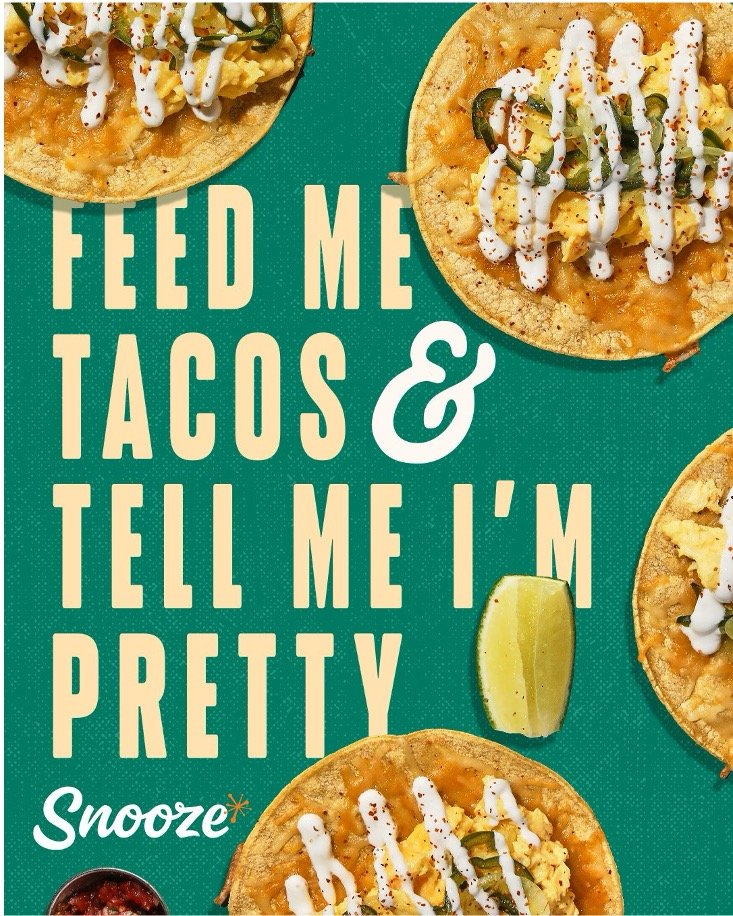
That is always tough. I was born and raised in Albuquerque, New Mexico, so I've always had a Southwestern palate. I love breakfast tacos. One of the first things I wanted to change when I came in was our breakfast tacos because I thought they were just mediocre. We made some alterations, and I now think our breakfast tacos are one of the best items on the menu. That's definitely my go-to. I love our breakfast tacos.
