
Corner Office Conversations: Sherif Mityas, CEO of BRIX Holdings
You started your career in aerospace engineering before moving into restaurants and franchising. How has that engineering background shaped the way you lead today?
One of the biggest advantages of an engineering background is that you’re taught early on how to solve problems in a structured way. You learn how to break issues down, collect facts, and work toward solutions methodically rather than relying purely on instinct.
That mindset applies to almost any industry. In leadership, you’re constantly facing challenges, and having a process-driven approach helps you think clearly while also creating a shared solution with your team. People need to understand not only what you’re trying to achieve, but how you’re going to achieve it. That was incredibly valuable early in my career and continues to influence how I lead today.
What initially drew you into the restaurant and hospitality industry?
It was definitely a winding path. After working in aerospace engineering and aircraft engines, I earned my MBA at Kellogg at Northwestern, which gave me the opportunity to pivot into consulting. One of my first consulting projects was in retail, and that opened my eyes to the consumer side of business — understanding customer behavior, experience, and what drives people to engage with a brand.
Restaurants were a natural extension of that. It’s retail with the added complexity of manufacturing the product within your four walls. From there, I was hooked. The restaurant industry is filled with great people, great brands, and a very collaborative community. Everybody knows everybody, and it’s a fantastic industry to be part of.
Across the industries you’ve worked in, what leadership lessons have stayed with you the most?
A few things stand out.
First, always surround yourself with people smarter than you. The moment you think you have all the answers is usually when you start heading down the wrong path. You need people who buy into the mission but are also willing to challenge perspectives and bring new ideas forward.
Second, listen more than you talk. Especially in consumer-facing businesses, leaders can fall into the trap of assuming they know what customers want. The reality is you have to get into the stores, talk to guests, and listen to frontline employees. If you’re not consistently hearing directly from customers, you’re guessing — and in business, guessing usually means you’re either lucky or wrong.
Finally, mentorship matters tremendously. I’ve benefited from incredible mentors throughout my career, and once you reach leadership positions, it becomes your responsibility to pay that forward and help develop the next generation of leaders.
You’ve spoken often about continuous learning and development. How do you operationalize that inside a multi-brand organization like BRIX?
Learning has to happen at every level. We obviously have structured training programs, both in the field and at the corporate level, but ongoing development is just as important.
One thing we emphasize is cross-functional exposure. For example, members of our marketing team may spend time with finance, not because they’re becoming finance experts, but because understanding how other teams think helps them see the bigger picture.
We also encourage people to stay curious and stay informed. Read what’s happening in the industry. Study what successful brands are doing. Don’t be afraid to borrow great ideas. Continuous learning is critical in this business.
BRIX operates multiple brands across different segments. How do you manage that complexity while maintaining focus?
In any multi-brand organization, you have to distinguish between what makes each brand unique and what can be centralized.
The guest experience for Friendly’s is very different from Clean Juice or Orange Leaf. Those brand identities, customer expectations, and value propositions need to remain distinct.
But behind the scenes, many things can be standardized. Buying strawberries, running a P&L, or managing technology platforms doesn’t need to be different brand by brand. The goal is to build shared services and scalable infrastructure wherever the guest doesn’t directly see it, while preserving what makes each brand special from the consumer’s perspective.
What makes a brand attractive to BRIX as you evaluate acquisition opportunities?
First, the brand has to have “good bones.” There has to be something distinctive about it — whether that’s nostalgia, product uniqueness, or a differentiated guest experience — that gives consumers a reason to choose it over competitors.
Many of the brands we acquire are struggling when we acquire them, but that doesn’t mean the brand itself lacks value. Often, it simply needs to be refreshed, refocused, and reintroduced to consumers.
Second, we spend a lot of time talking to franchisees. We want to understand how engaged and passionate they are about the brand. Franchisees who are actively involved, know their teams, and genuinely care about the business create a much stronger foundation.
And finally, we pay close attention to guest feedback. I’ll personally read hundreds or thousands of Google reviews to understand what customers truly think about the experience. That tells you very quickly whether there’s something worth building on.
You’ve emphasized sustainable, profitable growth over rapid expansion. How does that philosophy shape your franchise strategy?
It starts with unit economics. Each location has to create a real opportunity for franchisees to make money. That’s foundational.
Beyond that, we look at scalability. Can a franchisee successfully grow from one location to three, five, or ten? Can the model support multi-unit expansion in a sustainable way?
The goal is to create concepts that are both operationally sound and financially attractive for franchise partners over the long term.
BRIX has a diverse portfolio of brands. How does that influence the type of franchisees you attract?
That’s one of the advantages of having a multi-brand portfolio. Different brands attract different types of operators.
For concepts like Orange Leaf or Red Mango, we often work with first-time owner-operators or mom-and-pop entrepreneurs. Those concepts have smaller footprints and simpler operating models.
Friendly’s, on the other hand, is a much larger investment and tends to attract experienced multi-unit operators with existing infrastructure.
The portfolio gives us flexibility to serve both types of franchise partners successfully.
When BRIX acquires a struggling brand, what does the turnaround playbook look like?
The first step is understanding what made the brand successful in the first place and leaning back into those strengths.
A lot of brands lose focus as they expand too quickly and add unnecessary complexity. We often take a step back, simplify, and make sure the fundamentals are strong again — product quality, operational consistency, and the in-store guest experience.
Once the experience is right, we reintroduce the brand to consumers through marketing and awareness efforts. Then we leverage the scale of the BRIX platform to improve efficiencies and profitability.
That creates momentum. Franchisees begin making money again, guests return, and the brand starts rebuilding positive energy.
What signals tell you early on that a turnaround strategy is working?
We focus on a few key indicators.
First, guest feedback. I read Google reviews every morning. Are scores improving? Are customer comments becoming more positive? That’s an immediate signal.
Second, operational execution. Our field teams conduct detailed brand standard audits across locations. We want to see those scores improving consistently over time.
And third, we monitor the core financial metrics — traffic, order counts, average ticket size. Those numbers tell us whether guests are responding positively to the operational and marketing changes we’re making.
Looking ahead, where do you see the biggest opportunities in restaurant franchising?
I think we’re going to see significant consolidation over the next several years.
There are many great emerging brands that grow to 10, 20, or 30 locations but eventually struggle with scale and operational complexity. The economics of the restaurant industry are challenging, especially with labor, food costs, rent, and insurance all continuing to rise.
As a result, I believe you’ll see more brands joining portfolio groups that can provide infrastructure, efficiencies, and operational support. The larger groups will continue getting larger, and smaller brands will increasingly seek partnerships to survive and grow.
With so many brands under one umbrella, how do you create a unified culture across the organization?
For us, culture starts with values, and values are brand agnostic.
At BRIX, we operate around what we call the F.A.C.E. of BRIX: Friendly, Accountable, Committed, and Engaged.
Those values define how we treat guests, franchisees, and each other across every brand in the portfolio. I’m proud that if you ask our franchisees what BRIX stands for, they can immediately recite those values.
How do you approach leadership development and succession planning across the organization?
Leadership development happens at every level.
In our restaurants, we have clear development paths that help assistant managers grow into general managers and beyond.
At the corporate level, we focus heavily on succession planning. Every senior leader knows who could step into their role if needed and what experiences those individuals need in order to be ready.
We also believe strongly in experiential learning. We regularly invite emerging leaders into senior leadership meetings so they can observe discussions, challenges, and decision-making firsthand. Being in the room is one of the best ways to develop future leaders.
Franchising continues to evolve rapidly. What excites you most about its future?
Franchising creates ownership opportunities for people from all walks of life.
Starting a business from scratch is incredibly difficult, but franchising gives entrepreneurs a proven system, support structure, and brand platform that reduces risk.
I think we’ll see even more interest in franchising as people look for greater independence and long-term wealth creation opportunities. I’ve seen firsthand how franchise ownership can completely transform lives.
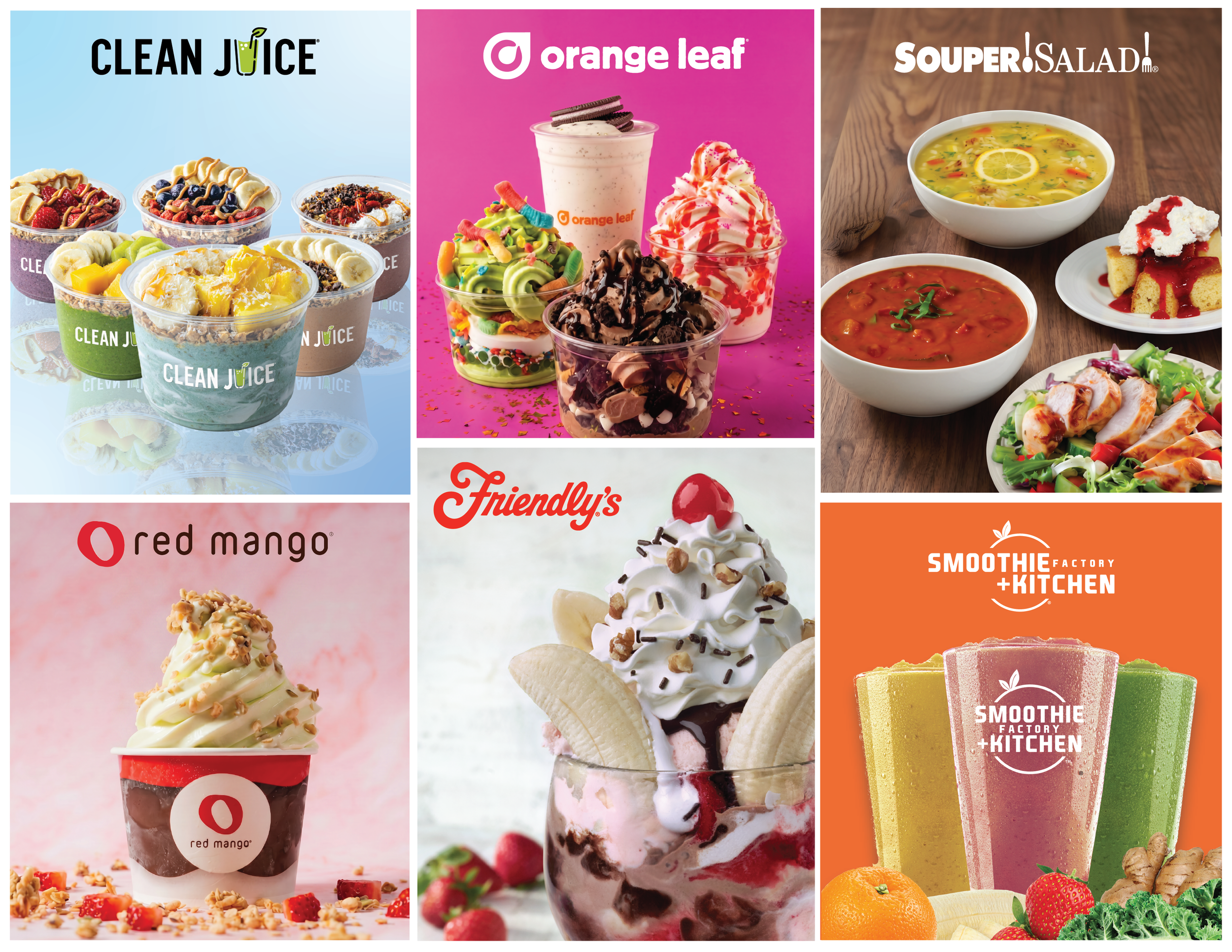
Final question — with so many great brands in the portfolio, what are some of your favorite menu items?
At Friendly’s, my favorite entrée is the Turkey Stack. It’s basically Thanksgiving on a plate and my absolute go-to order. And the black raspberry ice cream is phenomenal.
At Clean Juice, I love the Ocean Waves smoothie — blue spirulina and coconut, and it tastes as good as it looks.
I’m also a huge fan of our frozen yogurt at Orange Leaf and Red Mango. And I have to give a shoutout to Souper Salad — their homemade soups are outstanding.
It’s truly a great collection of brands.
