
Corner Office Conversations: Anthony Valletta, CEO and President of bartaco
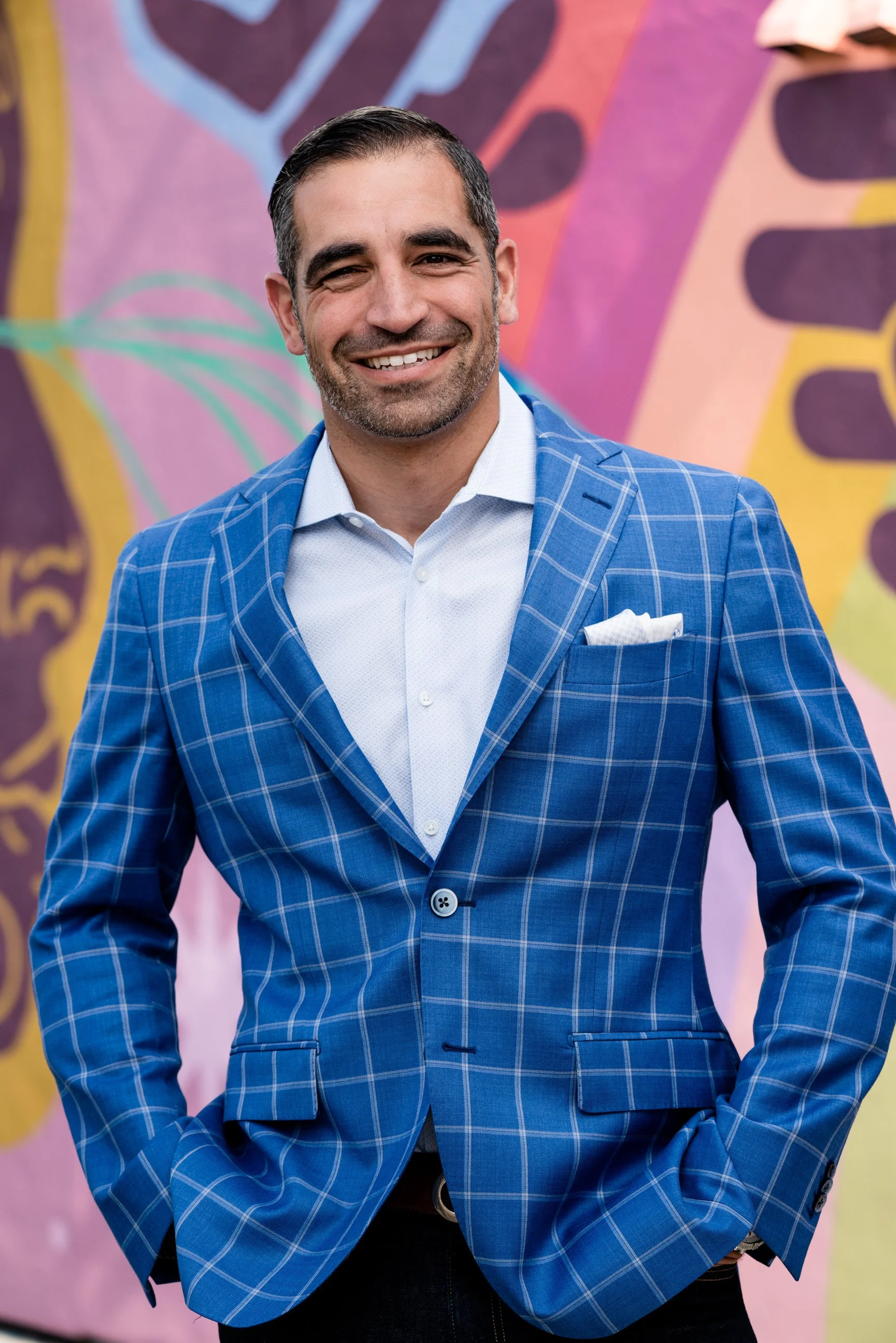
Over your career in the industry, you've worked across different segments, from fine dining to emerging concepts to now leading bartaco. What experiences have shaped your leadership style and the way you lead your team today?
I think the best thing is that it’s constantly evolving. I still haven’t found my style. I’ll figure out what I want to be when I grow up.
I’ve been fortunate enough to be in companies at so many different points. I’ve been part of a company going public. I’ve worked for a public company. I’ve worked for a company going from public to private, worked for startups, and worked for literally a small mom-and-pop.
I think each one requires different leadership skills. I’ve been fortunate to be put in those scenarios, find my way through them, and make plenty of mistakes. Each one of those experiences builds and compounds on the others.
In the early days at Darden, I learned about systematizing and what mass scale can do for you. Switching to an independent taught me what it means to lead when no one else is there to lead but you. You have to wear a million hats, and there’s nobody to call unless you have a network—and that was before I had built one. You learn independence.
Later, I was able to understand what it means to have big scale, be a growing company, have private equity involved, and manage all the things that come into play with that.
It’s hard to pinpoint certain elements. I’ve just been really fortunate to have a diverse background that has exposed me to so many different things and allowed me to watch some amazing leaders in the industry do it well. I give more credit to the people I’ve learned from than to myself. I’ve had some great mentors along the way who really helped me.
It’s been a great run at bartaco. What originally attracted you to the opportunity to join the brand?
There were two things. One, I was living in Denver, and we’re from the Northeast. My wife said, “We need to get back to the Northeast immediately.” So that drove the first domino to fall.
But when I started looking at the market, I realized that with every move I’ve made in my career, I’ve wanted to challenge myself with something I hadn’t done yet. I went from Michelin dining to QSR—totally different ends of the spectrum—but there are a lot more similarities than we think.
When I looked at bartaco, there were a few things that were really appealing. First, the brand has done a phenomenal job of staying relevant. We turned 15 last year. We pack a mighty punch for a small brand, and it was just different.
There are a lot of restaurants out there that are carbon copies of what already exists. bartaco was really doing something different, from conception all the way through today’s operations. When I got to meet the founders and our private equity firm and really spent time with the team and understood what they were trying to build and how they worked, I fell in love with the brand and the people running it.
I’ve been fascinated by the fact that we tend to challenge the norm and do things a little differently. We ask, “Who wrote the rule, and why do we have to follow it?” To me, that was fun.
The ultimate package that sold me on this versus some other opportunities was that it really felt like a combination of everything I had done in my career. I could pull elements from QSR, Michelin dining, high-end dining, and casual dining. Every part of my professional career could be used in some way inside bartaco to make the brand better. That’s a really rare opportunity, and I was fortunate to get a chance to be at the helm.
You have talked about the importance of being close to the restaurants and the guests. As CEO, how do you balance and stay connected to what's actually happening in the restaurants while fulfilling the other roles and responsibilities as CEO?
Ultimately, I think that is my primary job. I don’t have a business if there aren’t any guests in my building, no matter how good I am at everything else.
If that takes up hours of my day, those are hours I’m spending making the brand better because I’m hearing directly from people experiencing it at the first level.
It’s not easy. It’s a commitment. I’ve talked to a handful of CEOs who say, “I could never do that.” My response is, “Then you’re not pushing hard enough.” That’s really the unfiltered component. The feedback we get from our guests is huge, and I talk to a lot of them every single day.
Being in the restaurants is also really important because you see how your team is impacted. I do weekly interviews with my GMs to stay in touch, and my cell phone number is on the receipts, so I get calls from guests every single day.
I want to stay connected because too often executive teams look at a bunch of reports and backward-looking data. Then they get into a room with a leadership team that may be just as removed as they are, and they make decisions about the people on the ground—the guests and the staff.
Those people are going to give you the best, most unfiltered feedback. I learn things from the team on that floor that I won’t get from a management report. Not because the GM isn’t truthful, but because the team on the floor is really dealing with the decisions I make. The more data I can get from the ground, the better decisions I can make as a leader, and that makes my business better.
bartaco is a brand that occupies a unique space between fast casual and traditional full service. How do you define the brand today and what do you think differentiates it from other concepts in an increasingly competitive segment?
We’ve used the term “next-gen casual.” I’m not really sure exactly where that came from, but we thread the needle. We’ve leaned a lot more into full service than we ever have before because the experiential component of dining right now, as we all know, is extremely important.
It’s hard to define exactly where we sit. We’re definitely less fast casual and much more focused on the experiential component now.
I think the competitive advantage for bartaco comes in a few areas. First, we haven’t touched price in two years. We believe value is one of the biggest components of what we sell. We’re a from-scratch kitchen. We fresh-squeeze all of our cocktails to order, and we do it at a really affordable price.
People tell me all the time, “I can’t believe how inexpensive you are. You could raise your prices.” Tell me another guest or vendor who tells you that you could actually raise your prices. No one says that because the industry has taken a lot of price.
We provide a value equation and a full-service experience that is really hard to recreate because of our style of food. Everything is tapas-style. It’s street food. It’s smaller. The tacos are three inches, so you can mix and match.
I think the value proposition is huge. Second, the way the menu is designed, it’s not just tacos like a lot of competitors. It’s street food from around the globe. We get inspiration from Asia, South America, and other places that allow our menu to be more dynamic than a traditional Mexican concept.
It’s all gluten-free, and the menu is dynamic enough that people can come in five times in a week and have a very different meal. You can have tacos one day, a rice bowl another day, and a half chicken another day. There are so many ways to experience the brand.
In a very competitive space, we’re able to be nimble and be more things to more people than brands that are more one-track in their approach.
bartaco has really grown over the past couple of years. What’s the hardest part about protecting the brand identity as you go into new markets and grow into different regions?
It’s all about the people. I guess I’m preaching to the choir talking to you guys, but as you scale, you see it a lot. If you scale too fast and bring in too many outside people, it can become a carbon copy of what you want rather than the real thing.
We work really hard when we open new restaurants. We only put existing leaders who have been with the company for a minimum of six months—and preferably longer—in charge of those restaurants.
I opened in Loudoun County last week, and the GM who went there has been with me for, I think, about a dozen years.
It’s important for us to either put someone who is new to the brand into a restaurant that already has a good culture or, when we’re building new cultures in new markets and restaurants, put people there who can bring that culture with them.
We’re becoming more and more fanatical and protective about the people who run our restaurants and our support center. We’re focusing less on technical skills and more on personality.
When you look at evaluating growth outside of the traditional geography where bartaco has been, what are some of the indicators that you look at that show the brand will be successful here?
Man, if I had the answer to that, I’d be worth a lot of money. I’d make some real estate guys really happy.
We operate in a handful of lanes. We’re in cities, suburbs, and malls. For only 32 units, we’ve got a pretty interesting footprint. We actually had an outside firm do some research to try to identify where growth works and how you know something will be successful. Their reaction was basically, “Nothing makes sense about what you guys do.”
I think what it really comes down to is going into markets where we can become part of the community, where there may be some level of underservice, and where we can provide something different across multiple meal periods.
We look at takeout, lunch, midday, dinner, and late night. Of those five, three of them have to be home runs for us to know it’s going to be a successful unit.
Ultimately, we look just as much at things like co-tenancy, who is around us, and how people are using the area. We’re a convenience spot, not a destination spot, so places with good foot traffic tend to work well for us.
We look at a multitude of things, but I’ve yet to crack the code to the point where I’m completely confident I’ve identified a successful site. Hopefully someday I’ll get close, but we’re not there yet.
Moving on to the guest experience. You've talked about the “floor” of the guest experience mattering a lot. What does that look like operationally and how do you create that consistency across locations?
It’s what I always call the easiest hard thing that we do. Every decision we make starts with the question: What does this look like through the guest’s eyes? Is this better for the guest or not? If the answer is not a definitive yes, then we just don’t do it.
It sounds simple, but it’s actually much harder. You can look at something and say, “Wow, this could save me half a point on my P&L.” But is it better for the guest? No? Then we have to find that savings somewhere else.
Everything from operations to training, marketing, and cost management runs through that lens. It’s all really meant to drive the top line. Sales cover all sins.
That half a point you want to save by changing the quality of your napkin? The guests will notice at some point. You’re going to get it back by pushing quality back toward the guest, enhancing the guest experience, and recovering those dollars through sales.
We’re really militant about making sure every question runs through that lens. If something won’t impact the guest, then great—let’s go hard at it and figure it out. But we’ve made the guest the primary question in our restaurants. Even if it costs us more money, it’s worth it.
Within the industry, we've talked a lot about how competitive it has become and how many options restaurant consumers have. What is something that is misunderstood about today's consumer?
That’s a really good question. I don’t know if “misunderstood” is necessarily the appropriate word, but consumers have so much information at their fingertips. They have so many ways to analyze where they want to go, which menus they like, reviews, and everything else.
But the thing we constantly misunderstand is that none of that matters the second they step inside your four walls.
There’s no promotional menu or marketing gimmick you can do that replaces the experience. If they leave saying, “Man, I had a really good time, and Kevin took incredible care of me. I want to come back and see Kevin,” everything else becomes irrelevant.
It doesn’t matter as much what you did with SEO, a promotion, or social media because the emotional connection guests have with brands continues to be understated.
We look at loyalty metrics, but loyalty doesn’t necessarily have emotion—it can be transactional. I think we tend to underestimate how big an impact the emotional connection a guest has with a brand can have on the business.
We put all these tactical things in the way and almost cloud the reality that we may be missing the emotional connection.
You touched on it earlier, but you put your direct phone number on receipts. What are some of the things you've learned through those conversations directly with the guests that you would not have learned through other ways that you collect guest satisfaction metrics?
One thing I’ve learned—and it sounds self-serving—is how much people really love the brand.
Obviously, we see our metrics and know we’re doing well. But oftentimes, when operators look at reviews, the negative reviews have a lot written about them. The positive ones are usually something like, “I love your brand.” That’s awesome, but I want to know what they love about it.
I want to protect the things that are important to guests. Fortunately, most of those phone calls are very positive, and I’ve learned a lot about what they really love about the brand. It’s not just, “I had good food” or “I had good service.” I get the specifics about what makes them choose us over the person next door. That’s been incredibly valuable.
The other big learning for me has been third-party takeout. We all talk about how much it’s growing and becoming more common. We’re seeing an influx, and where we’re missing the mark.
Through these conversations, I’ve learned the components we need to focus on, the things we need to change, and where we’re missing the mark.
I had a guest last night who I was talking to on the phone for about half an hour. He said, “I’ll come in every month and get takeout from you for a secret shop report if you give me two free tacos.” I said, “That’s the best deal I’ve ever heard in my life.”
Some of these guests really want to be heard, and they actually want you to be better because they really care about the brand. I could write a book on the leadership lessons and operational lessons I’ve learned from these conversations about making our brand better. I couldn’t be more thankful for it.
When you think about building a team, you talk about how important it is when you're opening new restaurants to have people that understand the culture, the brand and have experience with the brand. How do you balance the combination of skill and passion? What are some of the things that you are looking for?
I focus less on skill, especially when I’m talking to people, for a couple of reasons. First, you can train a skill. I can train someone to write a good schedule or manage food costs. That’s not really the hard part of the job. In fact, it’s relatively easy.
I look for people who want to challenge themselves. Ego is one of the most dangerous things in our business. I want people who are constantly looking to educate themselves and push themselves.
We use the term “grit” a lot in our company. Angela Duckworth wrote a great book about it. There’s something about the grittiness of our industry. It’s a hard industry. We work crazy, weird hours. It’s a physical job and a mental job. What these operators do every day is really, really hard.
You have to have grit and, to use the right term, Kevin, passion. I talk more about why they love the industry and less about what they’re going to do with us.
If they really love the trade of what we’re trying to do—providing an experience, connection, and engagement—and they’re willing to continually educate themselves and have grit, it’s hard for that person to fail, in my opinion.
I focus more on who they are at their core because if they have a good core, everything else can conform to your environment, and we can train the things they may not have.
One of the biggest challenges facing our industry is developing that next generation of general managers and multi-unit leaders. What have you learned about building that pipeline and where some of the success has been?
There are two big learnings I’ve taken away. One that I’ve pushed my team on a lot is promoting from within. Everybody talks about it, and it’s a big focus of ours. We’ve had great success growing people internally, but it’s not just about the number.
When you watch somebody grow up in your company—maybe they start as a bartender, become a manager, and continue progressing—you can have a tendency to always see them as the younger version of themselves.
I use the analogy of being with your friends from high school. You automatically feel younger when you’re around them. If I meet somebody off the street for the first time, I automatically feel my age.
I think it’s the same when we look at internal talent. When we look at people who have grown up with us, we can constantly see them as younger and less capable than the shiny résumé coming in from the street.
What we’ve really learned is that the internal candidate we think is a B-minus is probably actually a B-plus or an A-minus. And the person off the street who looks like an A-minus may actually be more like a B-minus. That’s not always the case, but it happens more often than not because you’ve got somebody internally who already believes in the brand.
We put a lot of attention into stretching people and saying, “Listen, we have a great training team. We have great infrastructure. We have a great support team to help you. You have the drive and commitment to the brand, so we’re going to stretch you.”
My favorite story is one of our general managers, Jo Cooper. She started as a key and went to manager. About two weeks after she got promoted, they were looking for a GM in the restaurant. I was there while they were interviewing GM candidates, and I watched Jo work the dining room. Every guest knew her. She knew every guest. Every employee went to her with every issue. The chefs went to her.
I said, “Why are you looking for a GM? You have one.”
They said, “Well, she was just promoted to AGM two weeks ago.”
So what? We really started looking at how many people internally we had overlooked, not because we weren’t working hard, but because we just didn’t see the long-term potential.
Every leader has had somebody take a chance on them and see more in them than they saw in themselves. We spend a lot of time putting our faith in people. When someone recognizes, “Wow, they put a lot of faith and confidence in me,” there’s a really powerful connection that comes from that.
The other piece is that everybody talks about different generations being challenging. I don’t think they’re challenging. I just think they’re looking for something different.
I think younger generations care a lot more about impacting the brand and the organization. Years ago, when I came up, it was more like, “This is the job. Do the best you can.” And you said, “Heck yeah. I’m going to do those 10 things better than anybody else.” It was point, shoot, go.
Now people like to ask “why” a lot more. I think it’s our job to lead with the why and also probe back. We’ve found great success building pipelines and hiring better people by looking at those two formulas side by side.
As bartaco has adopted different technology, there is a continued emphasis on maintaining a high level of guest experience. How do you draw the line between technology that improves hospitality versus distracting from it?
Our big rule lately is that there should be no technology the guest needs to touch unless they want to.
If I want to pay at the table because it’s easy, that’s fine. It’s an option, not a requirement.
More of our technology investment is behind the scenes. It’s focused on efficiency—whether that’s a KDS at the bar, order management, personalization, marketing, CRM, or CDPs.
Customer-facing technology can be an easy way to offset labor, and that can make it an easy ROI calculation. But real hospitality is not in technology. Real hospitality is in the hands of the employee.
The opportunity is to give employees more information so they can provide a better hospitality experience. Maybe Kevin always likes his water with no ice, so we know that when he sits down. Whatever those preferences are, it’s nothing groundbreaking. We’ve been doing that for a very long time, but technology is making it much easier. It’s more trackable and more actionable.
We spend our time trying to reduce clerical tasks to allow our chefs to spend more time with our food and our teams, and our teams to spend more time with our guests. That’s how the hospitality level continues to rise.
Industry-wide costs have remained challenging, whether it's labor, food costs, or new store development. What do you think separates restaurant brands that have thrived in this environment of rising costs versus some of those that have struggled and will continue to struggle?
I think this is where real creativity comes out. A lot of the brands that are struggling are throwing offers and discounts at the problem. But when you discount, you have to raise prices elsewhere, and it becomes a little bit of a cat-and-mouse game.
What you’re seeing is that the brands succeeding are either really true to who they are—and guests connect with that—or they’re getting creative and thinking about what the future really holds and bringing that future into today. Those are the visionaries.
That can come through design and development—finding ways to make spaces come alive without having to spend an arm and a leg. Or when you’re looking at your menu, what are those fun, different things you can do to draw attention and really enhance the experience?
You see examples like the nostalgia element that Chili’s leaned into. They went back to the ’90s, and it worked. When you find something like that, you have to really lean in and own it.
I think people are much more hesitant now because it’s such a hard environment. They don’t want to run a test that might fail because they may not be able to afford the failure. So you wait for someone else to take the plunge and then copy them. But a carbon copy is never as good as the original.
I truly think the industry is rewarding those who are proactive, take educated risks, and lead rather than follow. There’s a level of risk you can take, but I think that’s really the difference.
It’s really challenging, especially for small independents. I was in that world before, and I wouldn’t envy being in that world today. But you’ve got to be your own leader in the industry. You can’t wait for someone else to pave the way.
Going back and thinking on your career as a whole. If you were starting your career again today, knowing all that you know now, what are some things you would consider doing differently?
Oh, God. How long do you have? I would do a lot differently.
Probably similar to most people who have done this for a long time, there are so many actionable things you can do in our industry. There’s nonstop something to do.
I had success because I tried to become the jack of all trades. I tried to put everything on my back, and I could carry a heavy load. My attitude was basically, “I’m just going to go. Whoever can keep up with me and carry some of the load is going to be with me, and whoever can’t, let them go.”
It worked for a while. It was successful for a while. I ran great restaurants and great organizations.
But I’ve learned more and more that over-systemization and ego can be dangerous. It’s not helpful, and it’s not a way to lead and grow effectively and sustainably.
It’s like driving in fog. You can see enough to drive, but you can’t really see what’s far ahead of you. I don’t think I did a good enough job clearing the fog and thinking about what was ahead of me early in my career.
I just said, “We’re going to do it.” And we were successful, so I just kept doing more of it.
As I’ve continued to “fail my way to the top,” as they say, I’ve learned a lot more about how not to do that. I’m still working on it every day, but I could give a million lessons to my younger self.
I look back and think, “Man, you were lucky. You were good, but you were lucky.” Sometimes it’s better to be lucky than good, but it all works out.
When you look ahead three to five years from now, what does success look like for you at bartaco as a growing brand?
Like anything, we want growth for our company, our team, and our shareholders, of course.
But in five years, there are two things I really want to make sure we prove. One is that bartaco is an insanely resilient brand. We were born around the time of the 2008–2009 crash. We thrived post-COVID, and we continue to build from here.
I think our brand is dynamic and interesting enough that we can get through just about anything, and we’ve proven a lot of that.
Secondly, I want to show that we’ve built what I think is a legacy brand. Fifteen years of the same brand without really changing very much is hard. Brands tend to fade into the distance a little bit and get tired. We continually evolve, but we’ve stayed true to our core.
I want to show that we’re a brand not only with staying power but with amazing growth potential—that we can see a path to bringing this brand to hundreds of cities across the country, increasing our footprint the right way, and staying true to that community aspect.
Not an easy one with so many items to choose from, but what's your favorite menu item? If somebody is a first time bartaco visitor, what is something that you’d recommend they have to try?
It’s a tricky question because our number-one seller—and what I tell everybody they have to try—is the pork belly taco. It’s just so different, and it’s delicious.
If somebody hasn’t been to bartaco, get the guac, get the plantains, the pork belly taco, the Baja fish taco, and finish with some churros. It’s just too easy.
For me personally, I mix and match, but the one I constantly go back to is our duck taco. It’s slow-cooked, it’s delicious, and I love duck. The tamarind sauce gives it that little bit of sweet and salty together. It’s just different. You don’t see duck in a taco that often, so that’s my go-to.
But if you haven’t been in before, get the pork belly taco—and order three more after it because you’re going to want them. It’s so good. That’s my advice.
